Hoofprints of the Stag

Hoofprints of the Stag
Showing posts with label Hoofprints. Show all posts

Friday, October 30, 2015

Back to the Future: Reflecting on Personal Change (featuring a Treatise on Crying)

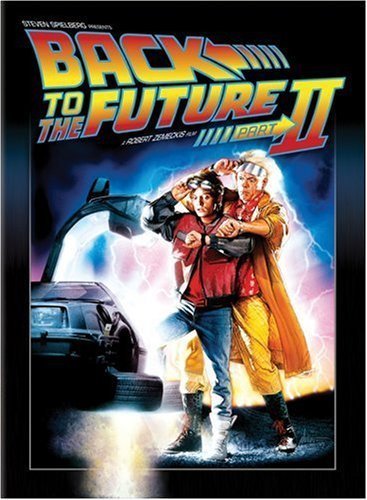
So last week, we hit the date to which Marty and Doc traveled in Back to the Future Part II.  As part of the 'festivities,' I decided to have a Back to the Future marathon over the course of two days, squeezing in parts of the movies between classes, prayer, and meals.  But of course, I cannot often do anything without thinking deeply about it and over-analyzing it, and watching Back to the Future was no different.  While watching Part I, I had a strange experience which led me to a period of reflection and musing.

I started writing this post last week and put it aside before I finished it, partly because I ran out of time, and partly because I wasn't sure quite what I wanted to say (and to some degree I still don't), but I was inspired by a similar blog post by a fellow Catholic blogger over at Journey of a Catholic Nerd Writer, and so I decided to write it out after all.  Even though it's over a week late, just go back in time in your mind to last week, and it'll be fine.  After all, this is time travel.

The fact that the date featured in Back to the Future II recently happened (October 21, 2015) has given many media outlets cause to reflect upon how the imagined 2015 compares to the real 2015 we are currently experiencing.  When you actually watch those videos and read those articles, it is truly amazing what we do actually have that the movie 'predicted' (but alas that the Cubs did not win the World Series though).

In a similar manner, my own recent re-viewing of the trilogy has instigated my own reflection on how I personally have changed over the years, particularly how I was in high school/college vs. how I am now.  Incidentally, I was born in 1985, so it seems to me to be quite fitting to make parallel my own reflection with similar reflections on the movies themselves.  But it wasn't mere thought that brought this reflection to my mind.

While watching Back to the Future Part I yesterday, I had what I can only describe as an unusual emotional experience.  I say unusual in the sense that it was unusual for me and not necessarily in a general sense. And I'm not really sure how to describe it.

Basically, I was watching the first movie, and when it got to the part where George McFly has his confrontation with Biff and he has his arm twisted behind him and then delivers his epic punch, for some reason, I started crying.  Well, maybe that's an exaggeration.  There were no actual flowing tears, but my eyes got really watery and my throat was tight.  It was like between being "all choked up" and actual crying.  Nevertheless, it was a strange emotional surge that lasted for several minutes (quite a while for me) that had no obvious explanation.  When it was over, I started chuckling a little bit because it seemed so funny that I would be crying at Back to the Future, but the emotion continued on, even up past the part where George McFly finally kisses Lorraine and saves the timeline.

What was causing this surge of emotion?  Nostalgia, perhaps?  Memories of my early days watching the movies at my grandma's house with my cousins flooded in.  I even had a memory of my older brother and I reenacting the scene with Biff and George McFly where my brother would twist my arm behind my back (not too gently) and then I would make a tight fist and pretend to punch him.  But was it the memories?  Maybe, but perhaps it was my identification with George McFly.  I have always seemed to have been the nerdy, sometimes awkward and unconfident type, and perhaps it was this epic moment of George's triumph over his own cowardice in the face of a bully that set me off.  Maybe it was the fact that I'd sung Earth Angel in the men's chorus in high school and thought of a particular girl I liked while singing it in a concert.  Who knows?  It seems impossible to analyze such things.

I had to pause the movie there, for it was time to head to the chapel for Evening Prayer, and I even had to compose myself before leaving the my room and make sure my eyes weren't red or something.  As I sat in my chair in the chapel, waiting for the prayer to begin, I wondered what in the world had just happened.  Why had I cried at Back to the Future?  This is where my reflection on the past began.

Dr. Zaius, Dr. Zaius
When I was in middle school and high school, I was a fairly emotionless person.  In fact, I was even partial to the notion that emotions needed to be controlled and every decision needed to be made rationally without any input from emotion.  In this respect, I was very influenced by Planet of the Apes, where Dr. Zaius says, "I have always known about man. From the evidence, I believe his wisdom must walk hand and hand with his idiocy. His emotions must rule his brain. He must be a warlike creature who gives battle to everything around him, even himself."  I did not want my emotions to rule my brain.  From my own experience, I saw that when people let their emotions (usually anger) influence their decisions, then the outcome was negative.

Though I did not often experience many intense feelings (other than happiness, I guess), I was always very cautions when I did feel something and generally sought  to keep it inside where no one could see it if not outright suppress it.  But again, these instances of emotion were rare.

Toward the end of high school, and especially during college, I noticed that I often had a lot of trouble knowing how to sympathize with people.  I never knew what to say or what to do (which I suppose happens to a lot of people), but more importantly, I never could feel the same way as the person.  If someone was super angry about something, I didn't know how to share the anger (i.e. I couldn't get angry over something that had nothing to do with me).  If someone was sad, I felt literally unable to feel sad with them.  What horrified me most about myself is that I rarely felt sad at funerals.  I mean, I knew that I was sad, but I didn't feel sad.  It was kind of weird.  There were several points in my life like this where I'd feel like I ought to cry, but I didn't feel like crying.

Now, given what I said before about keeping control over your emotions, I suppose one would expect me to be the kind of person who would see crying as a kind of weakness.  People say that this is a prevalent attitude among boys, and perhaps that is true, but from a relatively early age (like late grade school), I knew that it was okay to cry, even if you were a boy.  I never had trouble understanding this.  Of course, I still didn't want to cry, but I never saw it as a sign of weakness.  I know that I thought this way because of an episode of this old PBS show called Ghostwriter (remember Ghostwriter? What an awesome show!).

In the episode (the time travel episode, if you remember), Frank, an orphan boy, and Catherine, his foster sister, are trying to solve the mystery and they think they've failed.  Frank is sitting on the sidewalk crying over their failure when Catherine sits beside him.  "Sorry I cried," he says.  "It's okay," she responds.  "Everybody's gotta cry sometime."  "Not where I come from," Frank replies.  "When you live on the streets, you have to be tough all the time, or else you won't survive."  Then Catherine says, "Just because you cry doesn't mean you're not tough.  A tough guy is somebody who keeps trying, no matter how bad things look."  Here's a link to that part of the episode if you're interested in some epic 90s nostalgia: Ghostwriter: Just in Time, Part 3

"Sorry I cried."
That small, seemingly unimportant (to the plot at least) conversation stayed with me for many years.  Granted, I often remember obscure lines from shows I watched as a kid, but this one always stuck with me.  If I ever cried (which was rare, as I've said), I would think of that line, "Sorry I cried," and then remember that I didn't need to be sorry at all and that it was okay to cry.  So yeah, I never saw crying as any sort of weakness.

So we come back to my unempathetic, unemotional self from college.  I began to wish that I could empathize, that I could be sad or angry, or something.  I remember my junior year taking a conducting class for my music minor.  I can't remember the piece, but I was conducting our class orchestra in something, and our teacher said to conduct with more emotion, saying, "You have no soul."  I suppose I ought to have felt bad, but I didn't really.  I guess that's the case when you have no soul, ha ha.  My friend CJ, who took the class with me, would often joke with me that I had no soul and we would try to figure out ways to find my soul.

But joking aside, I actually did feel like I had something missing, like I was defective in some way.  I would look around at all these people who were emotional, people who cried, and I saw them as people functioning as they were meant to and myself as somehow defective.  And the thing that frustrated me the most is that while I cared about this idea, I didn't feel like I cared.  I wanted to cry about how I couldn't cry, and I couldn't do it.  What a strange thing.  What's funny to me is that people see crying as a sign of brokenness.  Perhaps someone's heart has been broken, perhaps something has happened in their life has made them feel broken and thus moved to tears.  But when I saw people crying over something that I knew I should be sad about, I was the one who felt broken, like I wasn't working right and they were, that something they had was missing or defective in me.  Broken, like a remote control car might be broken.

So one day (I don't remember when, but I do definitively remember doing this), I actually prayed to God that he would give me emotions.  I was sort of afraid to ask because I knew it meant having less control in my life, and I still believed that decisions shouldn't be made based on emotion, but ultimately I thought of myself as being cut off in some way from everybody else and that having deep feelings would fix that.  Perhaps that prayer was the turning point, though I certainly didn't see the results then.

So when I look back over the last fifteen years or so, I have definitely seen a change, and perhaps that prayer was what spurred the change.  Or perhaps it's just the weight of experience which wears down the walls that I never thought existed but in fact did.

The luckiest man on the face of the earth
I can point to several times in the last four years now when I have cried, probably more instances in them than in the twelve years before that.  And where I can't think of what I cried about in those early days, I know very specifically what I cried about more recently.  There was one girl I cried over; I never expected that to happen.  I cried once while watching a video of Lou Gehrig's farewell speech.  I've also had several instances of crying over music.  It happened once with the fourth movement of Beethoven's 5th Symphony, several times with various parts from the opera Turandot (for which I sang in the chorus in the Utah Opera).  Have you ever seen the movie Equilibrium?  It's just like what happens to Christian Bale's character when he hears Beethoven's 9th Symphony (see the clip here: Equilibrium: Preston cries at Beethoven).


But these crying catalysts don't always work.  How can something that makes you cry one time not make you cry every time?  I've had people tell me that they have certain things they can watch which will automatically make them start crying.  This always seemed strange to me.  But then I discovered that I had one.

There is a part during the fourth to last episode of Season 9 of The Office (Paper Airplanes).  I won't share it specifically, because spoilers, but let's just say it has to do with Pam and Jim.  There is a part at the end of the episode (if you've seen this episode, you might know the part I'm talking about), and the very first time I watched it, I cried (and actually cried).  I watched it over again, and I cried again.  A few months later I was going through Season 9 again, and it happened again.  Like clockwork.  I couldn't believe it.

And now, here in the present (a week ago), I was for some reason crying over Back to the Future.  What has happened to me?  I don't know, but I am so happy to feel something.  This moment of emotion over a nerd in a movie rising up over a bully set off a chain reaction in my mind that brought me back to so many moments in my life that all made me feel.

This was a really long and rambling post, so congratulations and thank you if you've tracked my Hoofprints this far.  Of course, if you didn't read this far, I'm not going to cry about it (see what I did there?).  I hope you have enjoyed it, and perhaps, that it made you feel.

To close, I will share one final reference to illustrate how I've changed over the years.  In one final throwback to the 90s, there is one episode of the TV cartoon Recess where Mikey, who normally daydreams and writes poems, becomes organized and very rigid with his demeanor, basically ridding him of all emotional expression.  Of course, his friends save the day and he goes back to the wonderful, empathetic poetry-writing prodigy that he is.  The first clip linked below is his unemotional poem, and the second link is the clip of the emotionally laden poem he comes up with later on: The Organized Poem, The Good Poem.

The line that sticks with me (just as the "Sorry I cried" line once did) is the following, which can now be said for so many things in my life (though not terrible, as indicated in the line):

"Such a terrible deal, it makes me feel . . .
it makes me feel . . .
Indeed.  It makes me feel."

. . .

It does make me feel.  Things in my life over the years have indeed broken me, and I can now share in the seeming brokenness that had so long eluded me.  That something missing has been replaced, that defect has been corrected.

It was in being broken that I was fixed.

Thursday, April 24, 2014

The Reason Behind the Name of this Blog and Its Remarkable but Veiled Importance

As you can see, the name of this blog is "Hoofprints of the Stag."  There is a meaning behind this name which, at least for me, has some significance.  Hopefully, you will enjoy this verbose explanation of its origin.  As you may have noticed, so far the first two posts of this blog have been self-referential and have not actually described anything concerning the purpose for which this blog has been written.  But those who know me know that I always feel I must give the proper context to any story before telling the actual story (which is why my stories are generally so long).

Sts. Hubert and Eustace, pray for us.
To begin the tale, I should mention that one of my nicknames in college was "The Stag," which is derived from my last name Stager (though it is pronounced 'stayger' not 'stagger').  I always thought it was one of my better nicknames, considering that a stag is a pretty cool animal (it makes me hearken back to the White Stag from The Lion, the Witch, and the Wardrobe, which was the first time I'd ever encountered the word 'stag'), and also considering it just seems like the kind of nickname that lends itself to cool sunglasses: "They call me . . . The Stag."  Interestingly enough, one of my other nicknames, 'Stagermeister,' is a play on Jagermeister, whose logo has a stag with a cross above it.  If only I could claim that logo as my own (without alcoholic connotations).  Further research as I write this post has revealed that the logo has origins in the legends of St. Hubert and St. Eustace, who both reportedly saw the image of a cross/crucifix between the antlers of a stag.

Hey, that's the name of this blog!
My signature card
At any rate, some time after the inception of this nickname, the Lorwyn block of Magic: the Gathering came out, and it contained a card named "Hoofprints of the Stag," which I fortuitously received in one of my booster packs.  My friends Ed and Mike decided that this card ought to be my 'signature card' as an homage to my nickname.  And so I built a deck around it (which, as of the writing of this blog, I still have).  I consider it to be one of the better Magic decks that I've built.  My other favorite card in that deck is Supreme Exemplar, which is awesome for reasons besides its supremely exemplary name, but I digress.  You would think the story would be over right about now since we've seen the origin of this blog's namesake, but it continues on (as most of my stories without much of a point usually do).

Fast-forward a couple of years to my first year as a teacher when I happened to be reading Harry Potter and the Half-Blood Prince over again.  I had never been the kind of person who approved of writing in the margins of books or underlining quotes, etc., but I saw that the half-blood prince's marginalia were very real communications to a person in the future (Harry, in this case).  I was inspired by the fact that anything I might write in a book might be read by someone else in the future for their edification or enjoyment.  As it happened, the first book I actually wrote in was "Educating for Life", a rather anti-climactic first book to be writing in, but it was my first book nevertheless.  I remember writing a response to one of the reflection questions in one of my assigned readings during my first year of teaching.  The question was something along the lines of, "What does it mean to you to be an educator?" or something like that.  I wrote, almost without thinking, "To Conquer Apathy."  Later on, I went back and read my responses to all the reflection questions and I came across that answer again.  I thought about how in education, a teacher must conquer the apathy of his students 1) so they will care about what they are learning and 2) so that they will care about the world and use their knowledge to fix it.  I also realized that in order to be a more effective teacher, I must conquer the apathy within myself; I had to care about what I was teaching, and I had to care about who I was teaching.  Then I broadened my idea about apathy to the world beyond teaching.  I saw that many of the conflicts we encounter in our lives and in the wider world are sometimes caused (or at least are allowed to happen) simply because people do not care.

Okay, so what does this have to do with the Hoofprints of the Stag?  I decided that if I was going to write in my books, that I should have some sort of message at the beginning of my books akin to "This book is the property of the Half-Blood Prince."  After much thought and many attempts and revisions (with some help from Ed, by the way), I came up with the statement written below.  I suppose it seems silly, especially since it is much longer and more ridiculous than the HBP's message, but I felt it communicated what I wanted the future readers of books I'd owned to understand: that perhaps my comments or the quotes I'd underlined would awaken some feeling in them, that perhaps what they read, whether my words or the author's, might spur a change in some way in their mind or heart as they had in mine.  I have written this preamble in every non-fiction book I have read (that I own) since I started writing in my books.  This is what it says:

This book has been marked with the hoofprints
of
The Stag

To track these prints is to embark on a journey,
to undertake a solemn quest.

Will you follow?
Will you dare to tread this path?

For this quest has but one goal,
one ultimate end:

To Conquer Apathy
Lentitudinem Vincere

That phrase at the end, "Lentitudinem Vincere," is what my initial research had shown me to mean 'to conquer apathy' in Latin.  More accurate translations in Google translate have since shown me a more accurate Latin word for apathy would be something like, 'accidia' or better yet, 'apathia.'  Lentitudinem means something more like passivity or hesitancy, apparently.  At this point, though, I have not decided to go back and rewrite it in all my books.

The idea of the book being 'marked with the hoofprints of the Stag' is that my writings are the 'hoofprints' that I (as the Stag) am leaving behind.  The reader doesn't see me (or perhaps even know me), but can see in some way 'where I have been' in my writings and underlinings.

So we come to the point at which I began to ruminate over what the title of this blog should be.  I realized that "Hoofprints of the Stag" was the perfect title for this blog not only because the posts are my hoofprints (since it is still my writing), but also because the blog's purpose, in a roundabout way, is the same as the purpose of my marginalia, that of inspiring the reader in some way and inciting a feeling or spurring a change of some kind.  Perhaps the beginning of the book Ed and I write will have this same preamble (pending Ed's approval, of course).  Perhaps Ed will also have a preamble of his own.

Though you, the reader, will not be joining Ed and I physically on our pilgrimage, you are nevertheless a part of our journey, and you are indeed compelled to undertake the same solemn quest to conquer apathy.

The question is: Will you follow?